

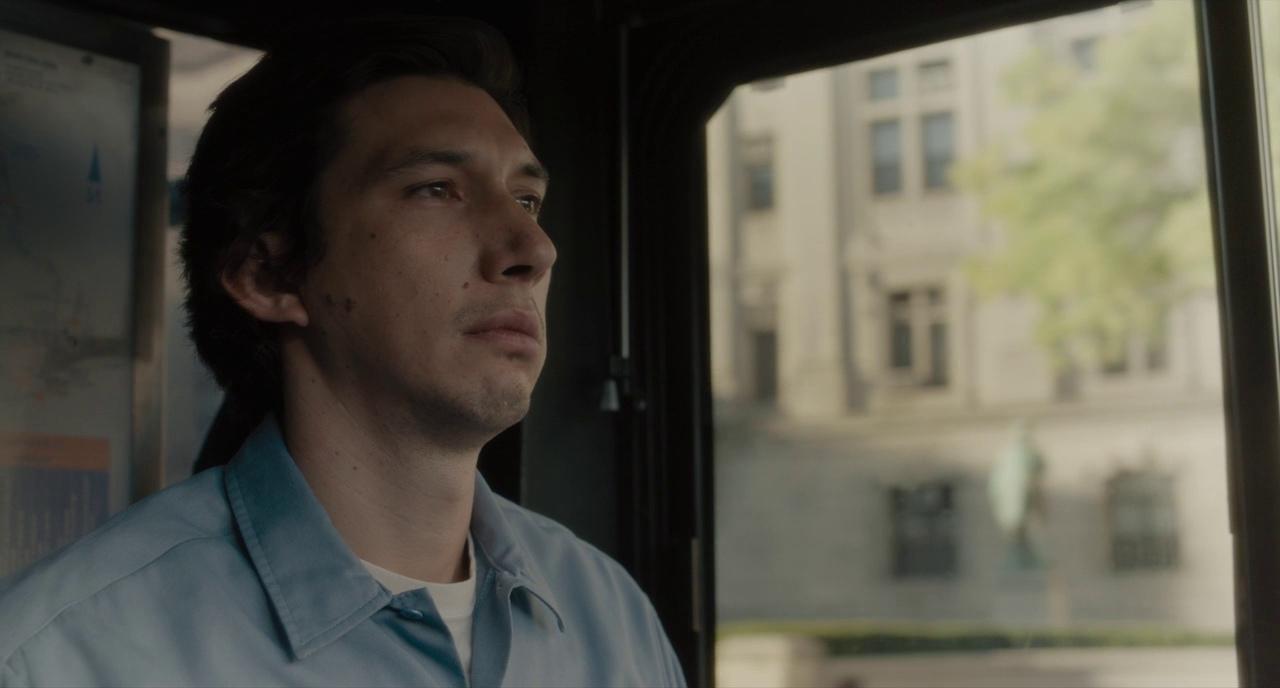
If one were to ask me why I spend so much of my free time writing about movies and thinking about art, I’m not sure I could give them a satisfying answer. I could try to think of some kind of reason, but would only arrive somewhere through bending the truth a little. Of course it would be nice to make some money off of this at some point, but I neither care to alter my writing to become more marketable, nor do I have any interest to advertise it myself or actively try to grow my audience in some other way. Of course it’s wonderful to see that there are people out there who take the time to read some of my texts, and it makes me even more happy to think they may even resonate with a few of them, but I also know that I would still be writing these paragraphs if nobody but me was bothered to read any of them. Maybe it’s my attempt to give the world something beautiful back, maybe it’s me trying to sort through and organize the chaos in my head, maybe it’s the result of my aspirations to be a creative person, maybe it’s just self-indulgence. And maybe it’s all of the above. But for however much truth there may be to most of these claims, I don’t even know myself how much I believe any of them.
However, there’s one thing that gave me comfort in this uncertainty: neither does Paterson. And yet, by the end of the film, despite never having let anyone besides his wife read any of his poems, he finds the self-worth to consider himself a poet. But one thing after another. Paterson, who shares his name not only with the film’s title but with the city he’s living in as well, is a bus driver by profession. And most of his days follow the same routine. He wakes up somewhere between 6.15 and 6.30 a.m. and gets into the clothes he has already put aside the day before. He then proceeds to eat his cereal and walks to work with his lunchbox in hand and the morning sun guiding his way. After his shift he comes home to his wife Laura, who he usually finds in the middle of redecorating their house, and they have dinner together. To finish the day he takes their dog Marvin for a walk, during which he stops at Doc’s bar for a beer. Fade to black, tomorrow arrives. Paterson finds visible comfort in the routine, in the expected. Every day is the same as the one before and the one after, but it’s a day he’s happy with, and it’s comforting to know that tomorrow will always be just as good a day.

As one of the very first shots of the film alludes to, showing a real headshot of a young Adam Driver in a Marine Corps uniform standing on the couple’s bedside table, Paterson’s need for routine stems at least in part from his military past. Adam Driver himself stated in a TED talk that, after he had been discharged from the military in 2004 due to an injury, he missed the discipline, rigor and camaraderie that comes with being a Marine. So Paterson has taken the routine of the military with him into his new life, having built an existence that suits his need for structure and fear of change as best he could. He neither has a phone nor a laptop, the owner of the bar he visits refuses to get a TV; to quote Paterson: “The world worked fine without it”. And Jim Jarmusch also further highlights the repetition by regularly returning to the same shot-setups throughout the different days, letting them bleed into one another. It’s difficult to pinpoint just how heavily Paterson still carries his past around with him. But what soon becomes noticeable, and more and more apparent the more often he only answers with “ok” or “no complaints” when asked how he’s feeling, is how hard it is for him to properly express his emotions.
Which he is only really able to do through his poetry. Paterson may be a bus driver by profession, but he is a poet by heart. Writing every second of the day that he finds some calm. Be it before his shift starts in the seat of his bus, during his lunch break while sitting on a bench and taking in the never-ending spectacle of a waterfall, or after his shift has ended and he is back home, Paterson is constantly scribbling poems into his secret notebook. Taking his impressions of the world around him and the conversations of his passengers and molding them into words of poetry. These poems neither rhyme – he likes them better when they don’t – nor are they often longer than a handful of sentences, but they offer wonderful glimpses into Paterson’s outlook on his life. With the subjects ranging from his favorite brand of matchsticks to his love for his wife to an old story he once heard. Ron Padgett – Jim Jarmusch’s favorite poet – wrote the poems specifically for the film, and captures with them a humility and emotional depth of Paterson that struck me as truly amazing. Together with the subtleties Driver brings to his facial and particularly his physical performance, they unlock the character of Paterson in an extremely elegant way.

Making me recognize more and more shades of my own personal relationship with my texts and my life in him. I don’t want to bore you with too many details about my psyche that aren’t directly related to this reading of the film at this point, but just let me say that I do regularly get annoyed at myself for how much easier I find it to express my feelings on the page than in person. Where, if my mind isn’t where I want it to be, I can simply take a short break. Or, if I suddenly realize my words don’t match the thoughts I had after all, I can simply delete the last few sentences. There’s a safety on the page that the world beyond it usually lacks. So if there is a topic that my mind can’t let go off, a feeling I have the urge to express or a film I want to discuss further, it’s often easiest to turn to the page. Black Dog & the interplay between emotion and reality, I Saw the TV Glow & my fears of living my life wrong, Megalopolis & why I find ignorant people so infuriating, Maze Runner & depression. I’m nowadays feeling more comfortable around most people than ever before, but it’s still different from the comfort of this text document.
Which becomes doubly annoying if being creative, being productive devours so much energy. Paterson’s wife – Laura – is also an artist. But where Paterson channels his life into his art, Laura channels her art into her life. Whenever she discovers a new passion or project, everything else in the world vanishes. Be it becoming a cupcake artist, a famous guitarist or redecorating their house in her signature black and white colors, no fantasy author in the world could come up with a scenario that would hinder Laura’s drive to creatively express herself. She represents the other side of the spectrum of people doing creative work. While she makes herself stand out through the boldness of her black and white color scheme and the eye-catching designs she uses it for, Paterson’s plain clothes and colors often leave him to fade into the background. As is alluded to in the first poem of the film, their relationship resembles a burning match and a cigarette. Laura is already burning brightly regardless, but wants to have someone to share the fire with. Paterson, on the other hand, already has all the ingredients needed to be a great poet. But needs a flame to help him recognize that fact himself.

And it’s this dynamic that helps turn their relationship into one of the most tender I’ve seen on the screen for a long time. Paterson and Laura live very different lives, but they do so together. When Laura’s cupcakes are a big sensation, they celebrate together. When Paterson’s notebook gets destroyed, they grieve together. They know each other deeply enough to be aware of their needs, wants and likes, and have built a coexistence that caters to all of them. Laura pushes Paterson to make copies of his poems because she knows he wouldn’t do it by himself, Paterson supports her in her creative endeavors because he knows how important they are for her. And also on a more intimate level, Jarmusch, Driver and Farahani capture their love for each other with beautiful detail. The lingering gazes, the repeating dialog, how they describe their box of matches using the same words. Paterson covering Laura with their blanket when he gets up early, Laura telling Paterson about her dreams while still half asleep herself. There’s a fundamental and surface-level understanding between the two that is so palpable it feels like it’s breaking the fourth wall.

To see the relationship between these two very different artistic processes blossom made me happy in a way I find hard to articulate. Over the past couple of years, I’ve found it increasingly difficult to work on creative projects. Despite the fulfillment I know I get out of writing texts like these, despite my desire to contribute to the beauty of the world in this kind of way, it becomes so quickly so tiring to get and stay motivated. The knowledge of how long it takes to write the texts makes me shy away from starting them, and if I do there’s constantly a part of my brain trying to drag my body away from the laptop and my thoughts away from the challenge. I am incredibly proud of many texts I’ve written, but the thought of starting a new one always fills me most of all with exhaustion. And it’s similar with most other tasks that I know are worthwhile. So I’ve become incredibly jealous of people who seem to feed off their past achievements to strive for new ones, who appear to be in an almost constant feedback-loop where the act of creating only motivates them to create more. I know how common my feelings are and that these creatively extroverted people have their own battles to fight, but the emotion of knowing you want to do something while being unable to get yourself to do it the way you’d want to is pretty annoying.
All of this to say, I found great comfort in how the relationship between Paterson and Laura is portrayed. Linking Paterson to the feeling I just described may only work tangentially, as he primarily struggles to find the confidence and self-worth to see the value in his poetry it deserves rather than struggling to actually write it, but nonetheless, it’s close enough to work for me on an emotional level. Having these two styles of creativity – one I see myself in and one I’ve long envied – under the same roof is a wonderful visual. Showing that they can work together and off each other, that their art can coexist within the same space. Two lost souls who have built their own little artistic island.

Speaking of artistic, let’s get to what I consider to be the main thematic story of the film. William Carlos Williams was a poet who, between 1946 and 1958, published a five-part modern epic poem about the city of Paterson and its people. He’s one of Paterson’s biggest inspirations for his poetry and appears frequently in the film, be it as a framed portrait in Paterson’s writing cellar, his books in Paterson’s collection of poetry or through a tourist by the end, who visits Paterson (the city) because of Williams’ famous poem. Paterson also channels a lot of Williams’ style into his own poetry, through which he often tries to channel the beauty he finds in the details of his mundane life into words on a page. But while he considers Williams to be a poet, he sees himself merely as a bus driver writing poetry. In his mind, there’s still a line separating real artists from “normal” people – like bus drivers – that happen to create art. One hangs on the wall of fame in Doc’s bar, the other comes to said bar to drink his after-work beer.
However, Paterson holds onto that distinction between himself and true artists, despite being surrounded by people trying to convince him otherwise. Whenever Paterson visits Doc’s bar, there’s a game of chess happening on one corner of the counter. But it’s not one where one opponent hopes to best another. It’s Doc playing a game against himself. Like Paterson’s writing, Doc plays for the intrinsic pleasure of doing so. And yet, when the chance arises, he doesn’t hesitate to go to a chess-tournament – even stealing some money from his wife to do so. Doc plays chess for his pleasure alone, but isn’t blind to the value his skill has beyond that. Same as with Laura, there’s clarity in the contrast of black and white. Because Laura has been begging Paterson to make copies of his poems for almost a year now, to let them unfold their beauty beyond acting as a form of self-therapy for Paterson. She reminds him that other famous poets have been in a similar place to where Paterson is now, writing poems in a secret notebook, hidden from the world. All in an attempt to push against his unwillingness to think of his work with the same pride that she does.
Even Paterson himself doesn’t hold other everyday-artists to the same standards he does himself. While on a walk with Marvin, he notices a guy in a laundromat rapping for nobody but his clothes idly spinning in the washing machine. Paterson stops and listens for a bit. The song is still unfinished, the rapper isn’t sure yet how to best perform the lyrics he’s written, but Paterson finds beauty in the craft nonetheless and isn’t shy to tell him that. Later, Paterson meets a young girl waiting for her mother and sister on his way home from work. She, just as Paterson, has a little notebook with her, full of poems she has written. They spark up a conversation, talking about busses and poetry, leading to her reading one of her poems to him. One that – as Laura later remarks – is really similar to Paterson’s style of writing. And still, while having no trouble calling her a real poet, he only presents himself to her as a bus driver who enjoys poetry. He’s constantly carrying a feeling of inadequacy, of unworthiness with him wherever he goes. One that prevents him from extending the graciousness with which he finds unending beauty in the world and other people to himself.

Jarmusch even gives this feeling a name: Marvin. Marvin is a constant present in Paterson’s life and growls whenever he kisses his wife. Paterson has managed to bring him under control to a certain extent; when he tells him to sit Marvin sits and when he tells him to stay Marvin stays, like a soldier and his commander. But it’s a constant fight to keep it that way, whenever Marvin knocks over the mailbox Paterson has to manually push it back in. As Paterson says himself, he’s expensive to feed. When going to Doc’s Bar, he is able to leave Marvin outside. Yet during their walks, it’s often Marvin who drags Paterson through the city instead of the other way around. And, ultimately, tears apart Paterson’s notebook of poems before it is able to be copied and possibly even published. After all, Paterson doesn’t consider himself to be a real poet, so what does it matter if his poems get destroyed without anybody reading them. After all, “they’re just words, written on water.”

However, all that changes on Sunday, the day after. Sunday is different. Jarmusch choses a different shot than before to start the day, Paterson suddenly dresses in black and white and tells Marvin, straight to his face, that he doesn’t like him. In his study, he looks fondly at the “Collected Earlier Works of William Carlos Williams”, a book he will now never have his own version of, and gets filled with regret. To process the loss of his notebook, he goes on a walk, but leaves his dog behind this time. During which he happens to meet Everett – also a regular customer at Doc’s bar and involved in a subplot I’m not going to get into today. Everett, who had had an emotional outburst two days before and has had to come to terms with his unrequited love for a girl since, is searching for meaning and solace in the streets of Paterson just as Paterson is. In a sparse conversation dominated more by contemplative silence than spoken word, the two of them agree to move forward. “Sun still rises every morning and sets every evening. Always another day.” The past is the past, tomorrow will come. So they continue on their respective walks.
During the film’s understated climax, Paterson arrives at the bench by the waterfall he usually spends his lunch break at. He is joined by a Japanese tourist, visiting Paterson to discover the city William Carlos Williams wrote about for himself. When asked whether he is a poet himself, Paterson, after slight hesitation, again claims he is merely a bus driver. But the tourist isn’t contempt to leave it at that. He reminds Paterson that William Carlos Williams was also a doctor and Jean Dubuffet was also a meteorologist. One can be a poet without being exclusively that, artists contain multitudes just the same as everyone else. Beyond creating art, there are no criteria that have to be met in order to consider oneself an artist. The tourist finds the beauty and poetry within Paterson as an artist and person that he himself failed to properly acknowledge until now. Before parting, the visitor leaves Paterson with a new, empty notebook. Who takes it, opens the first page, looks onto the waterfall and contemplates what the first words of this new work should be. The tourist turns around, finds Paterson lost in his thoughts, sees in him the poet he is but often fails to recognize himself as, and voices that truth with a simple “Excuse me?…. aha!”
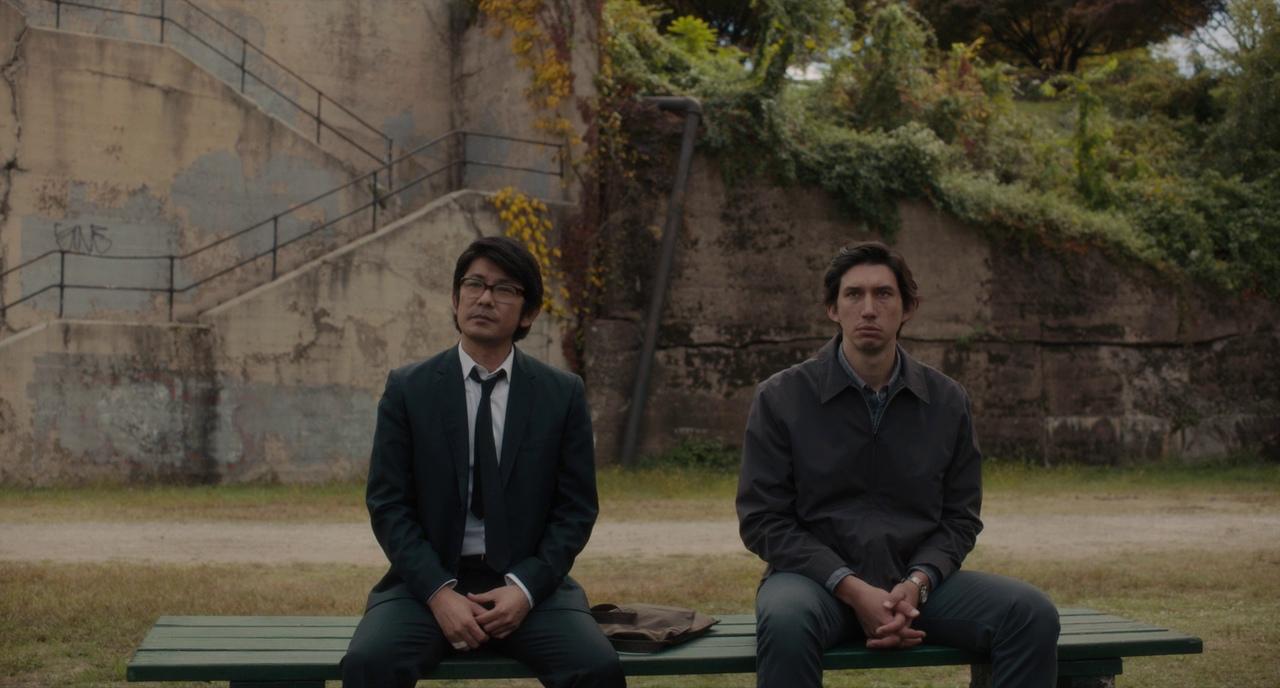
Throughout the week, Paterson encounters identical twins wherever he goes. In Doc’s bar, on his bus, on the streets of Paterson, in a dream Laura tells him about. When the two of them go to the movies, even Paterson himself afterwards remarks that the lead actress of the film looked like Laura’s twin. Alongside the circle-shapes that weave themselves through the entire runtime, serving as a visual reminder of the circular nature of Paterson’s routine-driven life, the twins are the film’s most prominent visual motif. And through this final conversation, we find out why they’ve been so omnipresent in Paterson’s past few days. Jarmusch has been trying to show him how misguided his insistence to think of himself as a bus driver only and nothing else truly is. There is more than one version of every person. And denying the world to see these different versions would be the crime, not calling oneself a poet despite not meeting some arbitrary criteria. Most people may know Paterson as a bus driver only. But most people also don’t know Paterson well enough to be able to judge what he is and is not. The girl that read one of her poems to Paterson, who he rightfully called a “real poet”, turned out to have a twin as well. Meaning she – obviously – also has a life outside of poetry. And yet, Paterson’s claim isn’t any less true because of it.
Through Paterson, the film as well as the character, Jarmusch celebrates everyday poets. Art doesn’t have to be monumental, doesn’t have to be transcendental, doesn’t have to serve any greater purpose, doesn’t even have to be published. For it to exist, for one person to engage with the world around them through its lens, is already all the purpose it needs. To claim there is some universal threshold that separates art from non-art and artists from non-artists is not only unnecessarily exclusionary, but also denies the inherent artistic nature of life itself. Going further, Jarmusch doesn’t even seem to view the creation of art as necessary. He already finds great value in the act of actively taking in the beauty of the world – listening to the passengers on the bus talk, watching a waterfall’s water fall, playing chess against oneself for the intrinsic pleasure alone, making the most wonderful cupcakes imaginable for the sake of it. As the tourist in his conversation with Paterson rightfully remarks: “a bus driver in Paterson: this very poetic”. There’s more beauty than we could ever hope to take in, even in a life such as Paterson’s, one that is usually quickly labelled as ordinary and boring. Only the world is often moving so fast and is so full of empty distractions that many people barely find the time to actually look for that beauty.
Which brings me back to my first paragraph. I’m still unsure why I’ve written the last 3.600 words. I doubt I will ever be able to give you a definitive answer to this. But I take comfort in knowing that there are many others out there also on a pursuit to capture what they find makes life worth living, what they consider worthy of spending time on, and channeling it into their art of choice. To add, even if only in miniscule amounts, even if only for their personal satisfaction, to the artistic qualities of our shared existence. And to think that Jim Jarmusch, whose artistic achievements even put these silly little texts I post on the internet into their shadow, still finds so much value in this everyday search for meaning and beauty within the mundane that he dedicates an entire film to it, makes my heart jump with joy a little. Maybe the intrinsic motivation my brain has created for this search has some truth to it after all. At least Jarmusch seems to think so. Ending Paterson with a simple question. Would you, instead of actively taking in the beauty of the world, rather be a fish?
Thank you for reading <3
texts that inspired me and helped me find clarity in my thoughts about the film:
– Bryant Tyler’s review on Letterboxd
– Richard Brody’s review in The New Yorker
– Jonathan Romney on filmcomment.com
– Steven Knepper “Paterson and Poetic Fidelity” on frontporchrepublic.com